
What is The Anger Iceberg Worksheet?
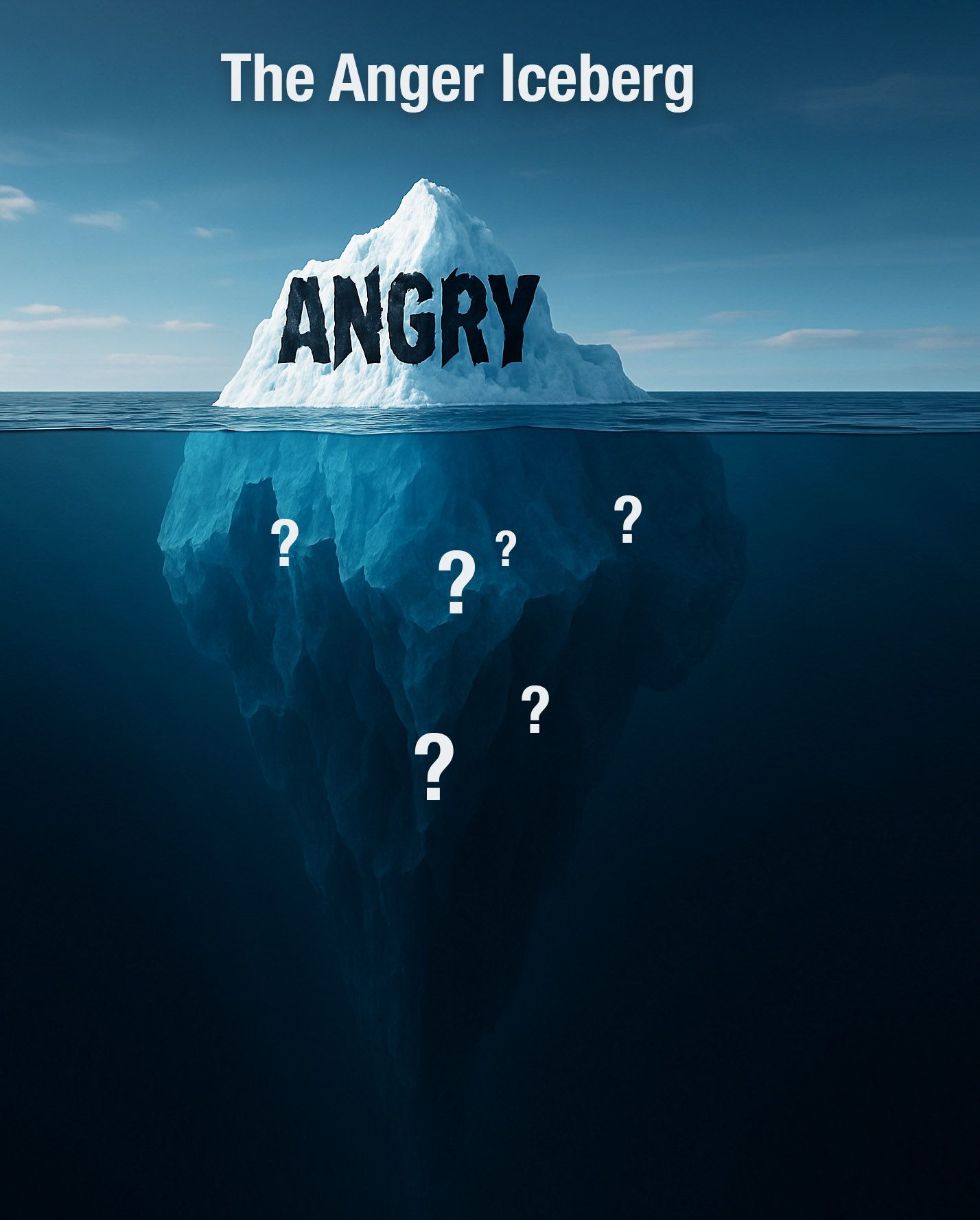
The Anger Iceberg Worksheet uses a visual metaphor to structure this work. The anger iceberg worksheet, a concept pioneered by the Gottman Institute, is designed to help individuals identify their underlying feelings, providing insight into the depth of emotions beneath the iceberg's visible tip. Clients write anger at the top and list the emotions beneath it—the hurt, fear, shame, or sadness that anger may be protecting. The worksheet prompts reflection on triggers and asks what else the client was feeling when anger arose.
CBT for anger helps individuals identify and change patterns of negative thinking and behavior associated with anger, and teaches practical strategies to manage anger triggers and develop healthier responses. Cognitive Behavior Therapy (CBT) was developed in the 1960s by Aaron Beck. CBT is based on the psychological construct that individuals' interpretations of situations influence their reaction more so than the situation itself.
How therapists use it
Introduce the worksheet after discussing how anger functions in the client's life. Ask the client to recall a recent anger episode and note what happened. Then guide them to slow down and reflect: what other emotions were present? What did the anger protect them from feeling? In CBT, use the Anger Iceberg to identify automatic thoughts linked to the primary emotion beneath anger, then apply cognitive restructuring to challenge those thoughts. The worksheet works as homework or in-session reflection, and the emotions clients name become the focus for deeper work in later sessions.
Who it's for
This worksheet suits clients who intellectualize their anger or who struggle to access emotions beneath it. It works well for those whose anger masks vulnerability, and for clients in cultures or families where anger feels more acceptable than sadness or fear. Anger is almost always a secondary emotion—a reaction that protects vulnerable emotions underneath. The worksheet is less useful for clients in acute crisis or those who need immediate safety planning. It also assumes the client can reflect on their emotional state; those with severe dissociation or alexithymia may need simpler emotion-naming work first.
What clients see
The client sees a visual iceberg with anger labeled at the tip. Below the waterline are spaces to write or select other emotions. Prompts ask what triggered the anger, what else they were feeling, and what emotions might have been underneath. The client completes this during or between sessions.
Anger Iceberg Worksheet
Anger is often the most visible emotion, but it’s rarely the whole story. Like the tip of an iceberg, it may be just what shows above the surface. Anger might seen as more acceptable than emotions like sadness, fear, or shame in some famili…
Modality fit
The first skill taught in CBT for anger management is developing an awareness of one's anger triggers and physical and emotional responses to anger, which involves recognizing the signs of anger and understanding the thoughts and beliefs that contribute to anger. The Anger Iceberg Worksheet supports this by helping clients identify the thoughts and beliefs linked to the primary emotions beneath anger, which CBT then targets for cognitive restructuring.
Common questions
When should I use this worksheet instead of an anger log?
Use the Anger Iceberg to identify automatic thoughts linked to the primary emotion beneath anger and apply cognitive restructuring, whereas an anger log tracks patterns over time. Use the iceberg when you want to go deeper into one episode and explore what the anger is protecting.
What if the client says anger is just anger, with nothing underneath?
That's valid. Anger develops for good reasons and protects us when we don't feel safe being vulnerable; the job isn't eliminating this protection but creating enough safety for clients to risk showing their deeper feelings. Don't force it. Return to the worksheet later when trust deepens.
Can I use this with clients who have trauma?
Yes, with care. The worksheet fits naturally into trauma-informed work because it honors anger's protective function. Move slowly and check in about safety. If the client becomes flooded, pause and return to grounding or regulation skills before continuing.
How does this connect to DBT?
In DBT, the iceberg fits naturally into the Emotion Regulation and Distress Tolerance modules and can be used alongside the DBT Emotion Regulation Worksheet to help clients observe, name, and describe emotions without judgment.