
What is Anger Iceberg?
Anger Iceberg is a distress tolerance skill from CBT, or Cognitive Behavioral Therapy. CBT was developed primarily by Dr. Aaron Beck in the 1960s and emerged from the collision of Beck's cognitive therapy and Albert Ellis's Rational Emotive Behavior Therapy, integrating cognitive therapy (focused on thoughts and beliefs) and behavioral therapy (focused on actions and conditioning). The anger iceberg model is based on a tool developed by the Gottman Institute.
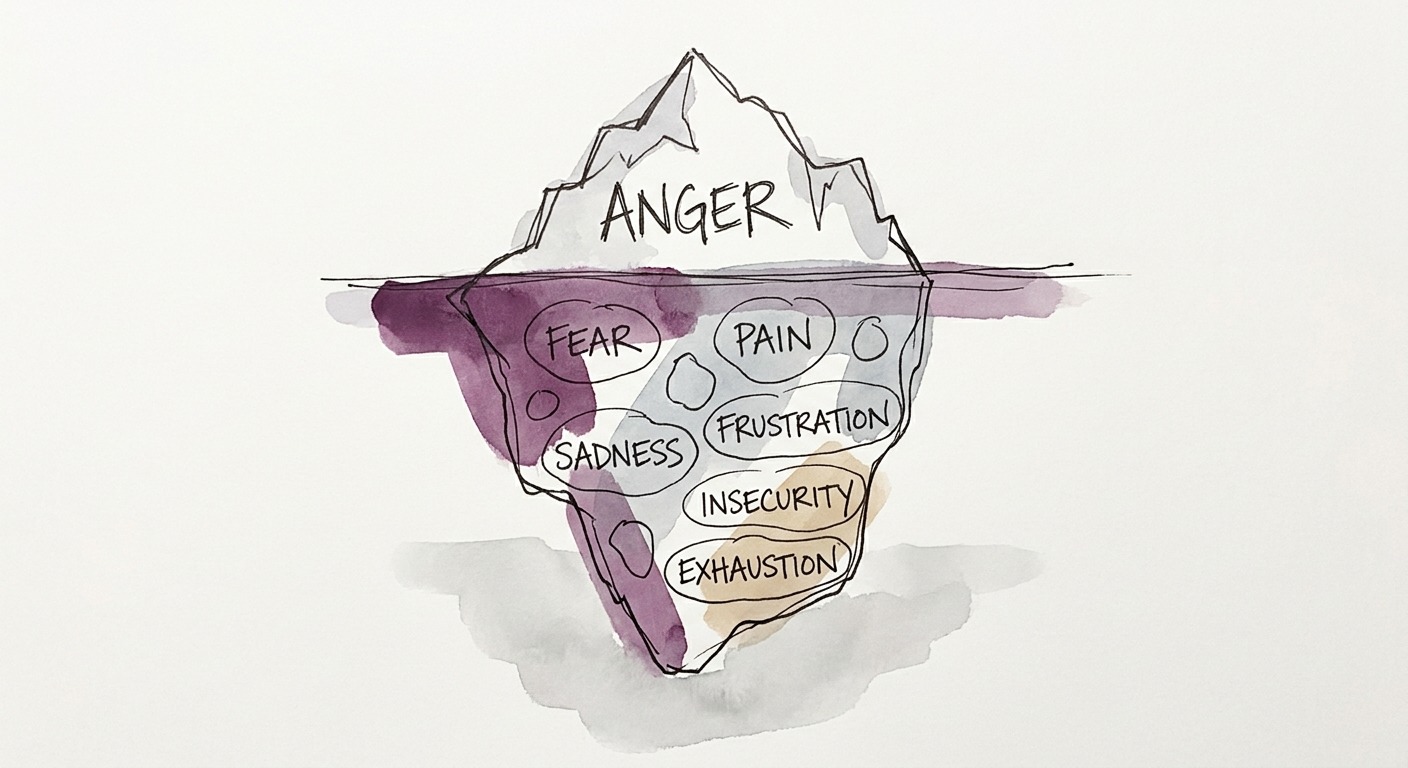
The worksheet guides clients through a four-step process. First, they describe a recent moment when they felt angry—what happened and how the anger showed up. Second, they review a list of emotions that often hide beneath anger: hurt, fear, shame, disappointment, loneliness, and others. Third, they check which of these emotions might have been present, even faintly, in that moment. Fourth, they reflect on how anger often rises to protect the more vulnerable feeling underneath.
How therapists use it
Introduce the worksheet by explaining that anger is a secondary emotion, which means it often emerges as a response to deeper, primary emotions that are harder to express. Ask the client to recall a recent anger episode and describe what happened and how the anger showed up. Then have them review the list of primary emotions and check any that might have been present. In the session, explore which primary emotion felt most true, and discuss how anger may have protected them from feeling that more vulnerable emotion. This shifts the focus from anger management to emotional awareness and acceptance of what lies beneath.
Who it's for
This worksheet suits clients who struggle with anger and are ready to look beneath the surface. Primary emotions such as hurt, fear, or frustration are often more vulnerable and less socially acceptable to express openly. When individuals feel threatened or hurt, they may instinctively respond with anger as a protective mechanism. Anger Iceberg works well for clients who intellectually understand anger but have not yet connected it to the vulnerable feelings underneath. It is less suited to clients in acute crisis or those who are not yet ready to explore vulnerability; in those cases, grounding or distress tolerance skills may come first.
What clients see
The client reads a brief explanation of how anger often masks deeper emotions. They describe a recent angry moment, then check emotions from a provided list that might have been present beneath the anger. They reflect on how anger protected them from feeling something more vulnerable.
What's Visible
Anger is usually the emotion that shows — loud, visible, hard to miss. But most of the time, something quieter is underneath it: hurt, fear, shame, disappointment, loneliness. Working with what's beneath the anger is often where the real ch…
What's Underneath
These are emotions that often hide beneath anger. Check any that might have been present — even faintly — in that moment.
Why Anger
Anger often rises to protect the more vulnerable feeling underneath.
Reflection
Modality fit
CBT helps individuals identify the unhelpful thoughts and underlying emotions that lead to angry outbursts. Anger Iceberg uses the primary/secondary emotion distinction to help clients recognize that anger often masks more vulnerable feelings, which is a core CBT technique for understanding the thought-emotion-behavior connection in anger.
Common questions
Is this worksheet only for people with anger disorders?
CBT for anger management focuses on identifying anger triggers, challenging unhelpful thought patterns, and building healthier ways to respond to frustrating situations. This worksheet suits anyone whose anger is getting in the way—whether or not they have a formal diagnosis. It works best when the client is ready to explore what anger is protecting.
What if a client says they're just angry, not hurt or afraid?
That's common. Society often encourages us to suppress or deny vulnerable emotions. Expressing vulnerability can be seen as a sign of weakness, leading people to default to anger as a more socially acceptable emotional response. Identifying these deeper emotions requires introspection and self-awareness, which can be difficult for some individuals. The worksheet is an invitation, not a demand. Some clients need time.
How does this connect to anger management?
Exploring and addressing underlying emotions is important to better manage and understand anger. Recognizing and addressing these primary emotions is essential for a more comprehensive understanding and effective management of anger. By identifying what anger is protecting, clients can address the root cause rather than just the surface behavior.
Can this worksheet be used with other modalities?
Yes. The primary/secondary emotion distinction appears in emotion-focused therapy, DBT, and other approaches. This worksheet is grounded in CBT but complements any therapy that works with emotional awareness and the protective function of anger.