
What is The Anger Iceberg Handout?
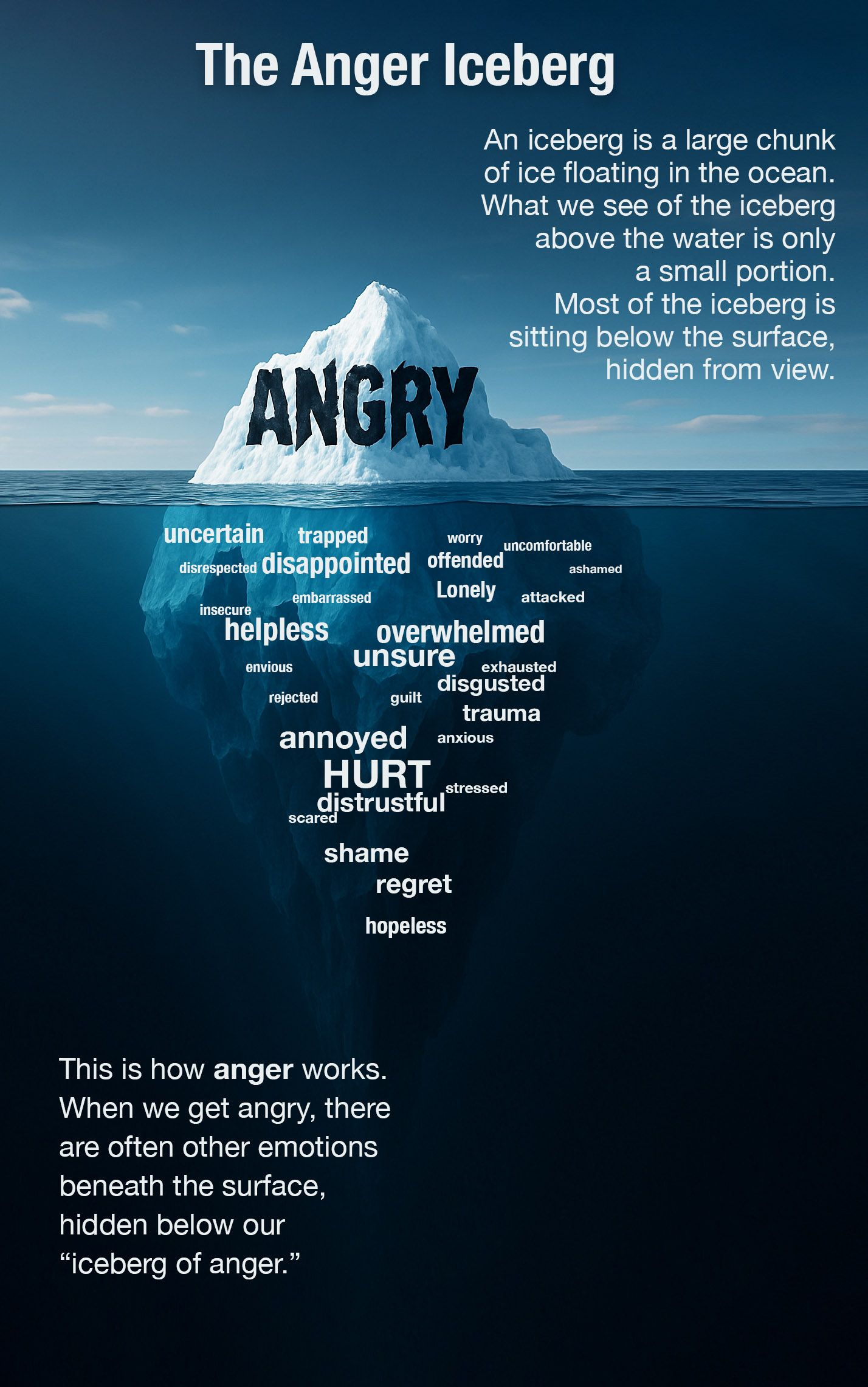
The Anger Iceberg is a psychoeducational tool used across cognitive behavioral therapy, dialectical behavior therapy, and emotion-focused therapy. It recognizes that anger is often a secondary emotion that masks more vulnerable feelings like fear, sadness, guilt or shame. The handout presents anger as the visible surface of an iceberg, with space for clients to identify the primary emotions and triggers beneath it.
The activity contains a brief explanation of how anger functions as a protective response, why certain emotions may feel more acceptable to express than others, and how triggers offer clues to underlying feelings. It names common primary emotions—hurt, shame, fear, jealousy—while acknowledging that sometimes anger stands alone.
How therapists use it
Introduce this handout when anger is recurring, reactive, or blocking progress in treatment. It works best after initial rapport is established, not in the very first session. Both live session use and homework assignment work. Many therapists prefer to use it live first to model curiosity and emotional language, then assign it later as reflection. Use the handout to help clients map the moment just before anger appears, identifying what they felt first and what triggered that feeling.
Who it's for
Anger is common in anxiety, depression, relational conflict, and trauma histories. This handout suits clients who experience anger that feels disproportionate to the situation, recurs in similar circumstances, or is hard to explain—signs that something underneath may be driving it. Anger can be more socially acceptable to express than emotions like fear, sadness, or shame, especially for people socialized to see vulnerability as a weakness. The handout is less useful for clients whose anger is a direct, proportionate response to a real threat or violation, or for those not yet ready to explore emotions beneath anger.
What clients see
The client reads a brief explanation of the Anger Iceberg model and the role anger plays as a protective emotion. They then reflect on their own anger experiences, identifying triggers and the primary emotions that may lie beneath the surface.
The Anger Iceberg
Anger is often the most visible emotion, but it’s rarely the whole story. Like the tip of an iceberg, it may be just what shows above the surface. Anger might seen as more acceptable than emotions like sadness, fear, or shame in some famili…
Common questions
When should I introduce this handout in treatment?
Use it when anger is recurring, reactive, or blocking progress. It works best after initial rapport is established, not in the very first session.
Is this handout appropriate for all clients with anger?
The iceberg model is most useful when anger feels disproportionate to the situation, keeps recurring in similar circumstances, or is hard to explain, which are signs that something underneath may be driving it. It is less suited to clients whose anger is a direct response to a real threat.
How does understanding anger as secondary emotion help treatment?
Clients learn to differentiate emotions. This is critical for regulation and self-compassion. Clients stop thinking anger is a flaw. They see it as a protective signal.
What modalities use the Anger Iceberg model?
The Anger Iceberg model is used widely in CBT, DBT, and emotion-focused therapy (EFT) because it opens the door to deeper emotional processing in a non-threatening way.